PaCha: Improving Resistance and Yield in Rice Cultivation
As a CNRS research fellow at the GEC, Éric Ruelland specializes in plant signalling, in particular, lipids—that is, the synthesis of small lipid molecules that play a signalling role. He is currently working on the CNRS’s PaCha IRP (International Resource Project), conducted in collaboration with the Vietnamese Academy of Science and Technology (VAST), notably the Institute of Biology (IB) and the Hanoi University of Science and Technology (USTH).
When a plant is subjected to various environmental stresses, it synthesizes small molecules—particularly lipids—that act within the cells to trigger an appropriate response.
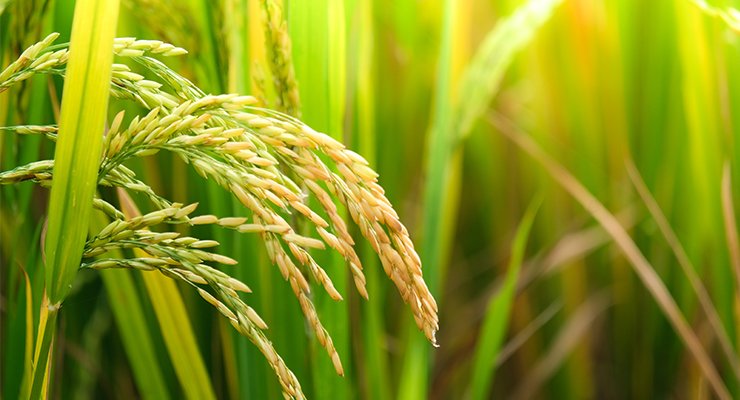
Given the foreseeable consequences of climate change on agriculture—such as water stress or, conversely, flooding—and rising food demand, ensuring global food security has become a major challenge of our time. Hence the need to develop sustainable agricultural practices to mitigate the effects of climate change while increasing crop productivity. The IRP PaCha was launched by the CNRS and VAST to address this challenge for rice cultivation in Vietnam. The project draws on diverse areas of expertise, including plant sciences, agricultural techniques, and biotechnology. Among the laboratories involved in the PaCha project are, in addition to the GEC at UTC, the Montpellier Institute of Plant Sciences (IPSiM), and, in Vietnam, the IB and the USTH.
How did this five-year project, launched in 2026, come to be? “The IPSiM in Montpellier has long-standing collaborations with Vietnam. As for UTC-GEC, contacts were established following a postdoctoral fellowship completed by Huong To Thi Mai, a Vietnamese researcher, under the supervision of Brigitte Thomasset. Impressed by the skills and expertise developed within the laboratory, she wanted us to continue working together once she returned to her home country. “The IRP PaCha came at just the right time, so to speak. It provided the ideal institutional framework for continuing the collaboration while ensuring the mobility of researchers from one site to the other. For my part, I would particularly like us to be able to supervise joint doctoral theses,” says Éric Ruelland.
The IRP PaCha aims to develop plant genomics approaches to address the challenges posed by the effects of climate change on agriculture — and specifically, in the case of Vietnam, on rice cultivation—and to ensure its sustainability. What is the role of each partner? “Our Vietnamese colleagues in the field will subject the rice plants to various stresses, particularly water stress. UTC-GEC will contribute its expertise in data analysis. Initially, this will involve analysing the data provided by our colleagues using two approaches. The first concerns the metabolomic response—i.e., to the set of metabolites synthesized by the plant in response to a particular type of stress. The second, the lipidomic response, gives us an overview of the lipids produced depending on the nature of the stress experienced. We will then compare the “control” condition with the “stress” condition, with the goal of using certain mutants generated by our colleagues in the field through gene editing and selecting the most resilient ones. For my part, I am particularly interested in the phospholipase D (PLD) gene family. The objective is to analyse PLD lines — enzymes that synthesize phosphatidic acid, a signalling lipid and to identify which ones are most — or least — resistant to various stresses. As for the IPSiM team, they are working on the ability of rice plants to absorb minerals and on grain filling. The goal is to select varieties with optimal yield,” concludes Éric Ruelland.
MSD