Accelerating Innovation in Electromobility
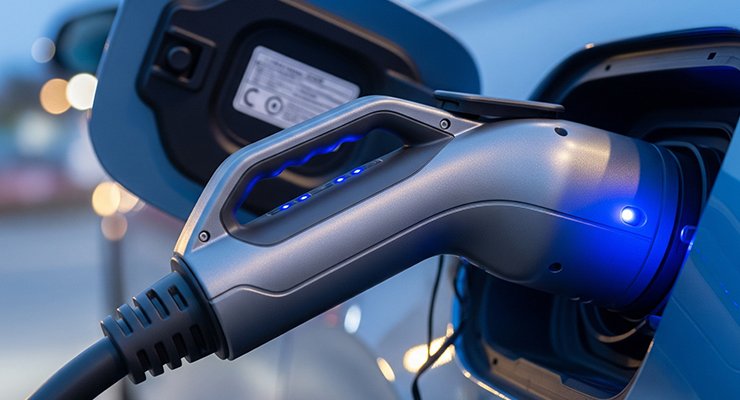
UTC is launching the CREM joint laboratory with the CETIM to accelerate innovation in the field of electromobility and address the multiphysical challenges that are profoundly transforming the mechanical engineering industries. This complementary partnership targets the off-road sector, the rail industry, mechanical equipment, industrial machinery and, more broadly, all sectors committed to decarbonizing their systems.
CREM, an acronym for CETIM-Roberval for Electromobility, brings together the scientific strengths and expertise of UTC’s Roberval Laboratory and those of the CETIM research centre at the interface with industry. It provides industry partners with a high-level scientific tool to support them as they navigate the profound transformations of low-carbon mobility. “The Roberval Laboratory’s trajectory is based on building an ecosystem of long-term industrial partnerships, closely aligned with its scientific ambitions. CREM marks a new stage in this strategy and is the fourth joint laboratory created with a trusted industrial partner,” explains Marion Risbet, director of UTC-Roberval. CREM will enable progress on the multiphysical challenges related to electric mobility, provide deeper insight into the vibro-acoustic and psychoacoustic issues of electric vehicles—which are essential for comfort, perception, and the overall performance of mechatronic systems—and accelerate the development of models, testing methods, digital tools, and demonstrators that meet the needs of industry , particularly in the off-road, automotive, rail and mechanical equipment sectors. The laboratory operates through integrated cooperation, drawing on the platforms, expertise, human resources, and equipment of both partners. CREM also contributes to the implementation of research results as part of the e‑Mobility R&D programme led by CETIM to develop innovation and technology transfer capabilities for the benefit of manufacturers. CETIM plays a key role here as an interface with these sectors, while UTC provides research, analysis and training capabilities.
Bringing together scientific, experimental, and technological expertise
UTC expects this laboratory to produce models, testing methods, digital tools, and demonstrators capable of reducing the technological uncertainties associated with the electrification of systems. For Prof. Claire Rossi, Director and Vice-Chancellor of UTC, this joint laboratory is truly the result of the strategic and long-standing collaboration between UTC and CETIM. “It illustrates the strength of the synergy between UTC’s academic research and the CETIM’s operational expertise. By combining our platforms, teams, and expertise, we are strengthening our ability to address the technological challenges of electromobility and to support manufacturers in their transformations. This integrated approach, which aligns research, innovation, and training closely with socio-economic needs, is deeply embedded in UTC’s DNA. CREM is a concrete manifestation of this: accelerating technology transfer to industry while training the engineers and researchers who will drive future transitions. The joint laboratory is co-led by Vincent Lanfranchi on behalf of UTC, who has more than 25 years of scientific experience in electromobility, having led numerous projects and industrial partnerships in this field, and Étienne Camus, the project manager in charge of implementing CETIM’s e‑Mobility R&D roadmap. This 11th joint laboratory further strengthens CETIM’s collaborative research model, recognized as an essential driver of competitiveness and autonomy for French industrial companies.
Serving the mechanical engineering industries
CETIM, certified as a Carnot Institute since 2006, has been establishing joint laboratories for over 25 years, dedicated to scientific and technological innovation in support of mechanical engineering companies. “CREM is fully aligned with our 2024–2027 roadmap under the Objectives and Performance Agreement and will help overcome scientific barriers to foster innovation in the mechanical engineering industries. Research is a strategic investment that must be sustained over the long term. This new partnership with UTC strengthens a long-standing collaboration and enables us to anticipate changes, secure the necessary expertise, and transform scientific advances into value for the entire mechanical engineering sector ‚” says Daniel Richet, CEO of CETIM. While UTC and CETIM are now taking their strategic partnership to a new level, the collaboration between the two organizations already has a long and fruitful history, starting with the founding of UTC. It started as a series of one-off projects but gradually evolved into an increasing number of joint initiatives over the years, culminating in 2008 with the first framework agreement, which was renewed in 2025. These projects have helped build a shared culture among the teams—a way of working based on experimentation, modelling, technology integration, and technology transfer to industry. CREM builds on this momentum by now focusing it on the major challenges of electromobility.
Concrete Prospects for Useful Solutions
The prospects are significant. CREM aims to accelerate the development of solutions for electromobility, particularly regarding key components and systems: batteries, inverters, motors, powertrain integration and the thermal, mechanical and vibro-acoustic behaviour of electrified systems. One of the key challenges will be to better understand and control the interactions between these phenomena. In an electric vehicle or an electrified machine, performance does not depend on a single component but on the entire system. A modification to the motor can have thermal, mechanical, or acoustic effects; an integration constraint can alter overall performance. CREM aims to address these interactions holistically. For UTC, the perspective is both regional and industrial. The goal is to strengthen an innovation ecosystem in Compiègne and throughout the Hauts-de-France, in line with national and European energy transition needs. By combining research, training, platforms, and technology transfer, CREM aims to support companies in their design, redesign and decarbonization efforts. Ultimately, the goal is for CREM to become a recognized hub for manufacturers facing the challenges of electrification—a place where one can understand physical phenomena, test solutions, develop tools and prepare the technologies of tomorrow. This approach is fully in line with UTC’s DNA: high-level research activities, open to practical applications, technologies and industrial transformations.
The CETIM-UTC relationship, a success story
The first joint laboratory, Latim, was established in year 2000, Since then, numerous projects have followed: collaborations on material fatigue, European projects such as H2REF (hydrogen) and research conducted under the hydraulics chair established by the 2008 agreement, in partnership with Artema. This collaboration has also yielded very concrete results, such as demonstrators developed with students, for example: hydraulically powered drones, which clearly illustrate the link between research, education and innovation. To sum up, this partnership is built on a strong scientific foundation, with more than twenty doctoral theses and several postdoctoral fellowships undertaken since 2008, covering topics ranging from fatigue to acoustics, including manufacturing processes and eco-design. CREM serves to structure and expand upon this existing framework.
KD