EBIOCARB: sustainable hybrid fuels
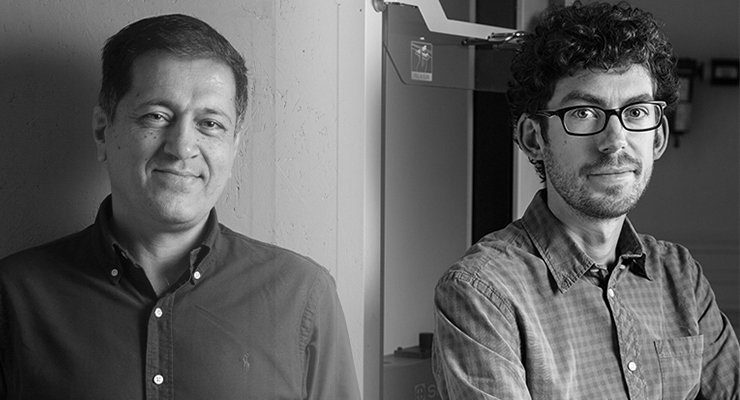
Khashayar Saleh and Mikel Leturia, respectively tenured Professor and a Senior Lecturer, are based in the Department of Process Engineering and the UTC-TIMR laboratory. The former is also Director of the research unit. As specialists in powders, they are jointly leading the UTC’s participation in the EBIOCARB PEPR, financially supported by ‘France 2030’ to the tune of 15 million euros.
Coordinated by the CEA via the APED¹, EBIOCARB is scheduled to run for nearly six years and involves a consortium of 11 partners, including the Institut Supérieur de l’Aéronautique et de l’Espace [aeronautics and space], Université Paris Cité, the CEA, INRAE and IFPEN, the latter being responsible for overall scientific leadership. The aim of the PEPR ‘Sustainable Hybrid Fuels: E‑Biofuels’ is to replace fossil fuels with bio-based and renewable alternatives.
What is the UTC’s role in this consortium? “Building on the Phobars project funded by the ANR |French national research funding agency], we are focusing on the pneumatic conveying of powders derived from unconventional solids such as biomass, intended to feed the reactors. One of the challenges we face is ensuring a consistent feed to the reactors,” explains Khashayar Saleh.
This challenge stems from the very nature of biomass. “Indeed, the particles are often fibrous, elongated and tend to become entangled. These properties mean that conventional design rules, established for more regular particles, need to be adapted to these biomasses. Among other things, this involves understanding these phenomena in order to optimise flow patterns. To achieve this, we combine a pilot-scale experimental approach with a numerical simulation approach,” explains Mikel Leturia.
What are some of the practical applications of EBIOCARB? “Essentially, it involves developing e‑biofuels for the aviation and maritime sectors – sectors where electrification is difficult. In the approach under investigation, the gasification of biomass (agricultural and forestry residues) produces a synthesis gas containing, in particular, carbon monoxide and hydrogen, which can then be converted into fuels. Why e‑biofuels? The ‘E’ refers to low-carbon electricity, which enables additional hydrogen to be produced through the electrolysis of water. This additional supply of hydrogen makes it possible to convert a greater proportion of the carbon from the biomass into fuel. It is this combination of biomass and electricity that gives them the name ‘hybrid fuels’, or ‘e‑biofuels’,” explains Mikel Leturia.
Another avenue being explored, again in the field of energy, is the co-electrolysis of CO₂ and water to produce syngas, which will supplement the synthesis gas produced from biogenic resources. “The aim is to reduce greenhouse gas emissions compared with fossil fuels,” explains Khashayar Saleh.
The production process begins with the preparation of the biomass, followed by its gasification, which results in the production of synthesis gas. It is after gasification that the process known as Fischer-Tropsch comes into play. “This process uses a catalyst to convert the mixture of carbon monoxide (CO) and hydrogen (H₂) into hydrocarbons. The addition of extra hydrogen – derived from water electrolysis, for example – would increase the yield and overall efficiency of the process. We face, however, a twofold challenge: the variability of inputs depending on their source and the seasons, and fluctuations in the availability of low-carbon electricity, depending on the sources utilised,” says Mikel Leturia.
Compared with natural gas, syngas production involves complex processes. “However, the attractiveness of syngas lies in its versatility, as a wide range of products can be manufactured from synthetic gas and its composition varies depending on the intended application. The programme focuses on the entire value chain, from biomass – how to transport it? how to process it? – right through to the final product. Namely, the type of biofuel required. If, for example, we wish to produce methanol, we must adjust the proportions of hydrogen, carbon monoxide and carbon dioxide. This raises the question of which biomass source to prioritise for producing syngas that enables the optimal production of various biofuels. This production takes place in biorefineries – refineries like any others, but adapted to work with bio-resources. This presents a number of challenges: cost, safety, impurities, variability in the resource …”, emphasises Khashayar Saleh. Is there evidence of the importance of the UTC’s role and its involvement in research-based training? The funding, as part of EBIOCARB, of one PhD thesis out of the 23 included in the PEPR, in close collaboration with two postdoctoral researchers at IFPEN.
¹ https://www.agence-aped.fr/pepr/pepr-ebiocarb/
MSD