44: Industry in the Future: UTC an academic partner for enterprise
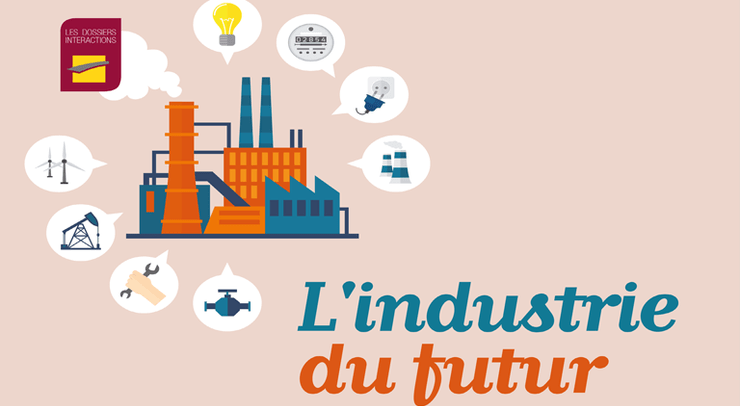
The ongoing digital transformation of industry is a major societal challenge. For UTC, accompanying a growing number of companies during the changes, the phenomenon represents an increasingly strategic field for studies. This Dossier zooms in on the university’s main activities and on the specific nature of its approach to the industries of the future.
Production and manufacturing are caught between massive deployments of digital processes in engineering, deep-reaching changes in the products themselves with the so-called “Internet of Things” (IoT) or “object-oriented Internet,” the advent of several breakthrough technologies such as additive manufacturings (using 3D printers) and we are seeing now the outlines of a real industrial revolution in the making. What this implies is a more connected, more competitive, more agile industry, capable of innovating faster, producing better and at lower costs – including for very small series of products, even down to ‘one-off’ products, more economical in raw materials, in energy consumption …
These are some of the decisive challenges for enterprises and in a wider context for developed countries, “Industrie du future” (France), “Industrie 4.0” (Germany), “Smart Manufacturing” ( USA), “Made In China 2025” (China) … Many have already prepared and adopted a national strategic plan in this respect to accelerate the changes, the finality of which depends on local realities. In France, for example, we had to commit ourselves to ‘territorial industrial renewal’ and to stop delocalization, while “Industrie 4.0” in Germany aims at preserving the leadership of German industries.
These challenges are strategic for UTC too. In particular, our research scientists are investigating two main ‘pillars’ of tomorrow’s industrial scene, the data from which will prove to be a key asset. On one hand, we have a continuum of digital information pervading engineering and production processes.
On the other hand, we have the specialty called data analytics: automated analysis of data recorded during and via the digital continuum, transforming them into new ‘knowledge’ and leading on to product design and manufacturing process optimization, production quality and predictive maintenance for industrial tools and machines. Our scientists have likewise launched research in additive manufacturing using various metal alloys.
The positive contribution of pluridisciplinarity
“What makes our approach to these subjects original”, underlines Benoît Eynard, research scientist at the UTC-Roberval Laboratory, “is that, in the first instance, it is systemic. UTC takes the position of being less a developer of specific technologies (robotisation, automation and control) and more an integrator, raising questions such as ‘how do you ensure these component bricks fit together in a future industrial landscape system?’. Faced with the complex issues that stem from questions like this, UTC has the advantage of being a pluridisciplinary HE institution, hence the holistic approach we have adopted”. UTC can mobilize, in parallel, its special skills, in mechanical engineering, process and chemical engineering, in computer sciences and their applications (ICTs), but also those from social sciences and humanities.
Thanks to this pluri-cultured dimension, UTC can integrate technological and social facets, and come up with proposals that are “with humans” and not “despite humans”. “We totally share the French vision of industries in the future, viz., not a 100% robotized factory floor”, explains Jérôme Favergeon, Director of the UTC Roberval Lab. “We agree, of course, that any repetitive tasks can and should be automated, but humans must remain at the centre of the process for all added-value tasks. That is the reason, above all other considerations, why we are focusing on methodologies and aids to decision, in order to make their tasks easier to perform”.
The really specific feature of UTC is that it cares out its research engagements on the industries of the future in partnership agreements with both major Groups and SMEs, thus enabling our University to propose the most relevant solution, taking them to a higher level of maturity that would be possible if we acted alone.
In order to cultivate this highly rewarding approach, we are planning to create an Open lab: one which will associate academic and industrial partners’ strengths and embodying an open, collaborative logic.

What is your vision of industry in the future and what roles will humans play then?
It would be an error to mistake substitution and replacement. When you introduce new digital tools, or robots, you often imagine them replacing human operatives. But the truth is that tools — the history of technologies bears this out — never replace anything: they value-add and transform the domain of possibilities. So-called “smart’” machines do not replace us. In reverse, they modify the way we perceive our surroundings, the way we reason, organize ourselves, interact with each other …
We often read about descriptions of industry in the future as modular, agile, resilient faced with environmental change, just as living bodes do. Personally, I feel that we should think less in terms of an isolated body adapting to its milieu, and more like a mycelium – a network of filaments that spread out underground and give rise, from place to place, to mushrooms. We humans biologically function in network modes. Digital technologies will allow us industry to become organized in a more distributed manner in space. Large-scale factory sites, where skills and operations are concentrated, might well be replaced by a networks of smaller production sites. And there again, it would be absurd to imagine that these distributed sites could operate without humans, since it is the latter who embody the sense and meaning of the activities and who make the networks work correctly.
What contribution can the UTC-Costech Lab offer industrialists while they reflect on this topic?
UTC-Costech investigates how technology, and especially digital technologies, modify human activities and the way we experience them. We can help industrialists raise their level of abstract thinking for the purpose of better understanding what is at stake during the digital transformation of their company and to ‘rethink’ the role that their staff and teams can play, faced with automats the purpose of which is not to replace them but more to transform their activities.

Developing smarter, more connected, more tailor-made, less energy-guzzling, easier to make, maintain and recycle products … i.e., that will necessarily be more complex, whilst continuing constantly to lowering their time-to-market and design, industrialization and production costs, To meet challenges of this scope and nature, industrialists must forego “silo” type work (all pulling in the same direction): they need to better integrate and capitalize on their expertise – viz., integrate their data in the various professional branches involved,; so they can more readily access the information they needed to improve their efficiency, to make maximum re-use of existing data when moving on to new developments, to produce new parts ‘perfectly’ at a first go, to manage production in an increasingly agile manner …
This is the challenge of digital continuity, inasmuch as it designates the capacity to be able to use all the digitized data appertaining to a product or to a system throughout their life cycle. Likewise, given that data to be integrated come from very diverse sources and necessarily heterogeneous formats: 3D CAD-CAM, technical drawings, engineering documentations, spreadsheet (Excel) files …
A near-future, specific, research team
Of course, industrialists already have and use a number of life-cycle Product Lifecycle Management (PLM) systems, analytical tools to manage the data and facilitate sharing them among the professions of their sector: Product Data Management (PDM) for design related data, Manufacturing Process Management (MPM) for industrialization related data (manufacturing ranges, etc.) and Enterprise Resource Planning (ERP) for production related data (product nomenclatures, ‘manufacturing orders’…) However,; to the extent that these information processing systems were put together scientifically in the 1990s, they do not offer a sufficiently fine granularity to comply with today’s industrial challenges.
One of the UTC-Roberval Lab’s teams designs analytical “bricks” to improve the degree of granularity and to fluidify sector & professional exchanges. For the time being, the research focuses mainly on the aspect of digital continuity of information in product-process design and between engineering per se and production. But its scope of investigation is expected to expand. It can extend to development of decision aids that enable optimization of the production process, the machine tool maintenance and/or the quality of products produced or again to produce parts in an additive manufacturing mode … all the above themes are part of the industries of the future and UTC is working on them. They suppose integration of heterogeneous data streams. Digital continuity truly will be a key-stone to tomorrow’s more agile, more productive industries. And as of 2018 UTC-Roberval will assign a specific team to explore and analyse these fields.

Dimexp has been assigned two fields of investigation. The first concerns the continuity factor for information between a real product and its virtual, digital twin. The research team is developing a set of algorithms to be used to identify a physical object, with a set of possible applications. “Among such applications, there is product control inspections on a production line”, explains Alexandre Durupt a UTC-Roberval research scientist ad science coordinator for the LabCom.
“For example, on an engine assembly line, the operative would video each engine using an e‑pad. The system would then automatically count the number of bolts inserted and check, real time that this number corresponds to the part list for that engine, via its digital mock-up. But this tool could also facilitate reverse engineering protocols: helping to build the digitale model for a product with a very long operational life expectancy, as would be the case for an industrial machine or a motor that were designed before CAD came to be, where a modern design evolution has become necessary”.
A digital twin
With this project, Dimexp is innovating on two scores. Firstly, its demonstrator allows the scientists to proceed from real objects to virtual models, whereas most digital protocols do the reverse, top down, so to speak, from top-down from model to product. We design, approve and certify, then industrialize the products virtually for the purpose of real manufacturing. But the digital chain stops there. “Our position is one we shall find among the paradigms of industries of the future”, notes Alexandre Durupt: “we embody the concept of a digital twin of a real object, for which no standardized definition exists as yet, but represents as we see it an integrated system of data, models and tools that enable us to track a product throughout its entire life-cycle and to transform the data into useful information to help in fault-finding and diagnosis and as a support to agile decisions”
To design this tool, the research scientists notably developed a deep-rooted neural network: an algorithm which learned how to recognize various combustion engine parts with an additional specific feature – to be able to handle heterogeneous data. The system can recognize a part from its 2D image, but also and this is new, from 3D models (CAD or digitized mock-ups for the parts examined).
Tracking inter-professional information exchanges
Secondly – and yet another research theme assigned to Dimexp: multidisciplinary collaboration between engineering team members. The LabCom is working on a collaborative “to do list”, with a tool designed to manage collaborative action lists to be used with an engineering project. The objective is to facilitate en enrich exchanges among the professions involved and more than this, to track progress and improve on the digital continuity factors. “Today, the PLM systems enable us to track the ‘history’ of the modifications carried out on the products as recorded in product or process manufacturing documents, but they do not indicate the reasons leading to the changes or the situation that led to the request for modification,” explains Mathieu Bricogne, one of the UTC research scientists. “The idea, with this “to-be-done” list is to be able to track a posteriori the reasons for the decisions made and to capitalize on this information for the next projects in the pursuit of continuous improvement”.
Another advantage: to be able to track exchange also provides indicators as to operational collaboration – and this opens the path towards a more agile form of project management. To better exploit this possibility, you can build a panel of indicators deemed representative of the exchanges among professional experts during an engineering project, by implementing automated data analysis techniques and this allows you to develop decision support tools to manage collaborative engineering more efficiently.
“Dimexp allows us to stay one step ahead”
Harvey Rowson, Project Manager at DeltaCAD answers our questions
From a DeltaCAD perspective, what is the interest in your having a joint lab with UTC-Roberval?
UTC-Roberval researchers provide their scientific and technological expertise, their capacity to draw u an international state of the art on a given issue. For us this is a real added value; it is one way of anticipating market trends, given that when a hurdle appears in scientific documents, it generally prefigures the announcement for a new industrial need. But more than this, Roberval enables us to plough more innovative and relevant furrows than those we might intuitively have chosen to explore. Dimexp allows us to stay “one step ahead” in respect to emergent topics that lie at the core of the challenges facing tomorrow’s industries.
How do you envisage valorising this research work?
The fundamental role devolved to Dimexp is to prove concept viability, with lab demonstrators such as TRL (technology readiness level, used to assess maturity before market launch), which is still relatively low. To increase the TRL value and develop real industrial scaled demonstrators, our objective is to sign partnerships with industrialists interested in these concepts.

If each link in the industrialization chain of a part to be machined uses specific software packages and therefore integrate data from different sources, there are standard data exchange formats. The CAD file is used by a CAM software that enables operators to model the trajectories of cutting tools in the 3D representation of the part. Likewise, the CAM file is exported via another standard in a post-processor which serves to generate an ISO code that can be executed by the numerically controlled machine tool.
Notwithstanding, the chain remains complex and, above other considerations, it should be noted that digital continuity is unidirectional – running from CAD phase to implementation at the machine-tool. If, during a production phase, certain machining parameters must be adjusted directed at the machine-tool, this information is not automatically sent back to the CAM programmers: the professional experts who, on the basis of CAD, draw up the machining strategy for a given part (choice of tools, definition of trajectories …) and the machine-tool programme per se. Knowledge acquire after manufacturing is thus not necessarily capitalized on to be used again for later projects and make it possible to machining the right part perfectly, first time round.
Bidirectional continuity
Issues like these were addressed in a first FUI project (completed in 2014) called: Angel* (in French for ‘An interoperable, agile, digital cognition workshop’). In order to ‘fluidify’ the digital chain, UTC-Roberval Lab worked on consolidating a new data exchange standard, STEP-NC (see below), so as to attain its industrial transposition./ The advantage here is that this standard is used at each interface of the chain and even does away with one step, viz., the need for a post-processor unit. It will be possible, in the future, for the machine-tool to read and implement directly the AM file. Moreover, STEP-NC allows you to have a return of information to the CAM level from the programme as executed by the machine tool. In this way, a bidirectional continuity has been achieved. *STEP-NC compliant Numerical Control
Aids to decision
What is the next step? It will consist of supporting the specifications of machining parameters drafting machining programmes, viz., to come up with a system capable of analysing a given CAD model’s geometry and by examining comparable parts already machined by an industrialist to automatically propose the best-fit machining strategies to make new parts. This is the objective assigned to a new FUI programme launched in October 2016, called LUCID (in French for “machining laboratory using smart characterization of data”).** “In order to develop this aid to decision-support tool, we must rebuild then capitalize various strategies implemented for the different parts to be machined”, explains Alexandre Durupt. “This constitutes one of the difficulties of the project, inasmuch as it presupposes that we analyse highly heterogeneous sources of engineering data (machine-tool execution ISO coded data, the CAM and CAD files …) to identify patterns that will form the kernel of a machine strategy”. The exercise is all the more complex that there may exist differing ways to produce a same shape through a machining process.
*: Angel combined inputs from UTC, ENS Paris Saclay, Safran, Airbus, UF1, Spring Technologies, CADLM, Datakit.
** : Lucid combined inputs from UTC, ENS Paris Saclay, ESILV, Safran, UF1, Ventana Taverny and Spring Technologies.
Digital continuity through time
Philippe Audinet, Head of Development & Support for the CAM branch of Safran Aircraft Engines and a partner to the Angel and Lucid projects, addressed some questions for Interactions.
As you see it, what is the main benefit in using Angel?
We use it to consolidate the STEP-NC* standard. This is all the more crucial for sectors like aeronautics that our products have an operational life expectancy of thirty, forty, even fifty years. To frame this differently, this is a far longer time than that expected of any computer device used to industrialize the process, or of the machine-tools, but even of the normal career span for the CAM programmers. It also requires that we build and use data models that are stable in time, in essence, ‘standardized’. By applying a single standard throughout the production chain, the connections between the various links becomes last longer *STEP-NC compliant Numerical Control
What challenges does Lucid introduce for Safran Aircraft Engines?
When you industrialize processes needed to make aircraft engine parts, the human added-value factor is paramount. Programmers have to integrate huge numbers of parameters to make sure the parts are machined properly and guarantee the transition from the digital model to the real, physical part. This transition, in fact, is a sensitive issue inasmuch as we work with some complex materials, such as titanium, that prove difficult to machine. Our engineers are constantly faced with problems that relate to vibration, to temperatures, to tool-bending, to parts … Consequently, there are always small discrepancies between theory and what a machine-tool really does, and several return trips are needed between CAM and manufacturing before we can obtain the part as we wanted it. Hence the interest we place in exploiting the capital background, the history of our machining programmes to better guide the programmers. That too is a form of digital continuity in ICTs and in time. Moreover, by capitalizing on our rich background, we can also assist the young programmers to progress in their special skills.

Production lines today are becoming increasingly fitted with sensors that record large quantities of parameters about the process in hand and the products coming off the line. With the ‘Internet of Things’ (IoT) or object-oriented Internet, these self-same products will be transmitting increasing amounts of data – about use, level of wear and tear, etc. Thanks to increased data storage capacities and associate data processing possibilities, the industrialists hope to draw new knowledge and significant added-values from the data flows: improvement in product design using the information incoming from real life utilization, reduction of the number of production rejects … this are the challenge and stakes of automated data analysis, a theme where UTC can provide further, complementary skills.
Making the data speak
Heudiasyc, UTC’s laboratory for computer sciences and applications (ICTs) already has amassed a lot of field experience in data analysis techniques, a mix of statistical methods, machine-learning (automat learning algorithms) and artificial intelligence (AI). “These techniques aim at identifying regular patterns in a data flow – firstly from a purely descriptive stance”, explains Sébastien Destercke, a research scientist at UTC-Heudiasyc.
“For example, in order to try to explain a manufacturing faulty part in products, an a posteriori analysis can be conducted on the variables as they evolve in use. Such regularly noted patterns can be used to correlate parameters that the company’s professional experts had already suspected or to reveal connexions that they had not identified hitherto, especially when the faults resulted from combinations of numerous input variables. From there on, the idea was to build predictive models – applying the hypothesis that the past will resemble the future, quite probable in a relatively stable manufacturing process, in which case the model will be able to predict a plausible output from a given set of observed inputs. The idea, notably, is to use these predictive algorithms during the production phases, to anticipate in real time, risks of faults occurring in product parts. The models can also be ‘prescriptive’ and suggest actions to correct a faulty or improve a product. In certain cases, we can even imagine taking this still further: automating the decision implementation itself, something we are currently trying to do with driverless cars.
Nonetheless, it still proves very difficult to replace human expertise in cutting-edge industrial sectors, even using the most recent methods, the objective here often consisting of providing the process operators with aids to their decision-taking, thereby helping them carry out complex tasks”.
A new QA method
UTC’s Roberval Laboratory, combining expertise capabilities in process control and applied mathematics, is engaged in developing tools to optimize the control of manufacturing processes and control of quality assessment (QA). For example, Roberval scientist have designed and built a unique method combining multi-variable Statistical Process Control (SPC) and process diagnosis. “SPC is used to detect abnormal shifts in the critical characteristics that define product conformity with design specs, and this may be used to prevent production of more faulty parts”, explains Nassim Boudaoud, a Roberval research scientist. “It is a method currently used in industrial sectors, but generally speaking only in its simplest format, i.e., with the capacity to track the characteristics of a product, one by one. But there are often correlations between these characteristics. To illustrate: the control process for the assembly tolerances for a car door may point to a defect without compromising the overall integrity of the assembled door unit, inasmuch as there are also built-in geometric compensations.”
Notwithstanding, it is practically impossible to establish the decision rules applicable to monitoring several characteristics simultaneously. Thanks to Data Analysis (DA), the tools on which the Roberval Lab is working can achieve this. Moreover, it is a truly novel innovation, combining, as it does, product and process data.” What we offer is a hybrid approach that aims at showing a better detection of ‘spec drifts’ and a forecast of evolution”, underscores Nassim Boudaoud.
“In concrete terms, thanks to a historic analysis of data, we can infer connections between product characteristics and various observable states in the process and tis allows us to say, at a given time T, whether the process is operating perfectly, according to plan, or not. In the latter event, we can predict evolution to anticipate a future process state that will results in faulty product parts”.
The immediate objective of UTC is to push these investigations further, testing these tools Roberval have designed and developed with real data flows and thereby proving their capacity to improve operation performance statistics.

The Auto Inergy Division de Plastic Omnium, the world’s prime supplier of plastic fuel systems (tanks, piping …) and depollution systems for private vehicles, has 35 factories located in 19 different countries, with one site at Venette, in the Oise ‘Department’, including the company’s global R&D centre. Two sites close to UTC, with whom the industrialist has just signed a partnership on the theme of automated production data analysis. “As we see it,” notes Philippe Convain, Digital Manufacturing Director for the Division, “DA will be the key asset for ‘Industry in the Future’. Today, we have peaked out in terms of performance levels for controlling our processes. By better exploiting our data, we hope to be able to attain a new level, resulting in lower manufacturing costs and, in the long run, gains in flexibility and our capacity to rapidly change production, if the need arises”.
Less rejects, less stressful work
In its factories, Auto Inergy now collects and records huge amounts of data; data relating to the manufacturing process: when a fuel tank is pressure-formed, for example, some 5 000 parameters (temperatures, pressures, etc.) are recorded … a figure to be multiplied by the 20 million, i.e., the number of fuel tanks manufactured each year by the Group. There are also data about the products themselves (diameters, lengths, fuel proof assurance …) and the production environment (temperature in the assembly hall, etc.). “Traceability of our production proves very useful to explain a posteriori the reasons for a spec drift in product quality”, notes Philippe Convain. “Using automated data analysis should enable us to go much further down this road, and in the first instance, it will enrich our knowledge base about the processes we employ. Today for example, we measure the thickness of our tank walls. Without this tool of data analytics, we could not control tank wall thickness and we are talking about 5 000 data recorded each tank we pressure form and we use them to deduce the physical laws that describe the links between process parameters and the product characteristic specifications. If we can attain this goal, we shall no doubt discover a host of unsuspected links –links that we had in the back of our minds but for which we are now able to quantify to assess the real impact. And above other considerations, we shall be able to move forward from simple production reports to prediction of spec drifts: for a process that lasts from one minute, even if it takes two to three seconds computation to anticipate problem we would have enough time to react and thereby avoid a tank reject. This way, we should be able to reduce reject rates quite significantly”.
Yet another challenge consists of making the production operatives’ tasks easier. For complex processes such as pressure forming of tanks, the machines can set off hundreds of alarm signals that need to be interpreted in order to make the right decisions. This is a skill that requires years of experience. “If we had the appropriate tools capable of guiding the choice of a relevant corrective measure in the case of a spec drift, the process operators could acquire this know-how fairly easily”, thinks Philippe Convain. “Moreover, process monitoring would be less stressful and enable the operatives to focus more on improving process productivity. »
Multidisciplinary support
In order to accompany Plastic Omnium faced with these challenges, UTC will combine the expertise available at UTC-Roberval and UTC-Heudiasyc laboratories. Nassim Boudaoud, the research scientist who will be supervising the work for UTC-Roberval, defended his PhD thesis on system control at UTC-Heudiasyc and will be in a position to offer the industrialist partner his double culture in process engineering and data analysis. UTC-Heudiasyc will support the work, contributing to solving issues in process and product diagnostics and in the development of predictive and prescriptive models.
As a first stage, the collaborative agreement with Plastic Omnium will see the hiring of a PhD student, who will be assigned to the project area that the industrialist has reserved in the Venette factory. “Our processes are complex and there can be hundreds of reasons for a product ‘reject’”, explains Philippe Convain. “First and foremost, we have to prove the concept for a few identified faults, by experimenting via the demonstrator installed on the factory site. Then, gradually we will be able extend the tests to analyse other kinds of fault. And we shall test the predictive techniques on other pilot installations before we deploy them to all our factories”.

Currently, in order to avoid as far as possible break-downs and failures of industrial tools and costly non-programmed down-time repair sessions, companies today tend to practice preventive maintenance, which can be systematic, or at predefined points in time or decided conditionally. In the latter case, for example, maintenance actions are triggered generally by indicators such as excessive wear of a tool. But, to better anticipate risks of break-downs and keep the number of maintenance operations down to the strict amount necessary, the ideal situation would consist of continuous data collection about the state of the production system, thereby ensuring a reliable projection of its evolution in time.
This is the principle that underpins preventive maintenance, i.e., prediction as to what moment(s) will see a possible breakdown occurring.
The connections between product, process and maintenance
A proactive approach, such as just described, is more complex to implement and, consequently, remains rare in industry today. But the upsurge of quantities of data collected on production lines and the possibility to use automated data analysis, will no doubt accelerate the movement. With this in mind, the UTC-Roberval Laboratory has begun research on an original methodology that opens the path towards more reliable, more accurate predictions. “Today, in our factories, maintenance policies for the machines tend to be disconnected from process monitoring and product quality considerations”, explains Zohra Cherfi, a research scientist working at UTC-Roberval. “And yet, when you think about it, line maintenance determines the process quality and thus, in part, the product’s quality. These are early days for our research but we have the objective to identify those signals in process behaviour and/or in product quality observations, that can alert the operatives as to a risk of machine breakdown and/or failure, and with these we hope to build an aid-to-decision tool to optimize maintenance policies and their implementation”.
Amélie Durupt, likewise a research scientist at UTC-Roberval stresses that “This is a novel approach. To be fair, there is abundant literature about the links between process, product and maintenance, but the papers mostly relate to systematic maintenance scheduling and not in regard to establishing rules for decision that take these three parameters into account, leading to making the right decisions at the right moment, in a relatively automated fashion”.
UTC-Roberval will be engaging its scientists on two research projects with industrialists concerned by this novel topic.

UTC and Saint-Gobain recently signed an agreement with several aspects, one of which appertains to the concept of Industry in the Future. In this area, the aim is to engage on research projects in predictive maintenance with Saint-Gobain Sekurit, a key player in the world market for car window glass. “We now have some 30 factories round the world, all operating in a highly competitive, demanding market”, underscores Jean-Luc Lesage, Executive Director Operations at Saint-Gobain Sekurit and Managing Director for its ‘Europe’ branch. “What this entails is that we must be in a position to control our processes properly, covering product quality, delivery date assurance, but also the frequency of breakdowns and maintenance costs of our glass making machines”.
Shifting gear, upwards
This industrialist has used the principles of preventive maintenance for a long time now. He also implemented predictive maintenance methods, restricted nonetheless to only a few pieces of line equipment, without any direct incidence on the core of the glass making business, viz., the transformers. His objective is to shift gear upwards by making use of the data collected in the Sekurit factories and centralized over special data links and sensors that are increasingly equipping the company’s production lines. “Data Analytics (DA) will enable us to look for fine correlations, hitherto undetected, between the quality inspection results carried out on the glass products, the process parameters (temperature, pressure, etc.) and the operative intervention data”, explains Jean-Luc Lesage.
“By analysis of this large amount of information, we hope to be able to make gains in terms of maintenance scheduling g frequencies and then amount of maintenance needed. But more than this, we expect that the added knowledge we gain from the analyses will enable us to improve process design and inherent resilience”.
Excellence on both banks of the Rhine
Over the past two years, our industrialist has conducted a few studies and launched pilot schemes, in the field of preventive maintenance, with one of the company’s academic, historic partners: Rheinisch-Westfälische Technische Hochschule Aachen or RWTH Aachen)), in Aix-la-Chapelle (Germany). Collaboration with UTC will relate to other processes. “What we are interested in”, adds Jean-Luc Lesage, “is UTC’s expertise in process control and data analysis, but also the specific ‘signature’ of the Compiegne institution. French universities do not deal with problems in the same way as German universities or Hochschulen. When we work with partners who possess different cultures, different visions and background eXperience, we can enlarge the spectrum of our own skills and thereby move forward more efficiently”.
Moreover, just as is the case with RWTH in Germany, UTC-Compiegne is close to a Saint-Gobain Sekurit factory and a Saint-Gobain R&D centre at Chantereine (CRDC). “UTC research scientists will be cooperating with CRDC scientists and developers, relying on experience gained at the Chantereine factory site on the data as to machine breakdowns”, adds Jean-Luc Lesage. “The interest of this tryptic, we hope, is to achieve some concrete advances for our factories”. “The core of Saint-Gobain Sekurit’s technology is Franco-German, and therefore we must subsequently seek excellence on both banks of the Rhine”, sums up Sylvie Perez, Director CRDC, at Chantereine. “As we see things, it is especially advantageous for us at CRDC to be able to collaborate with UTC scientists in their fields of ‘excellence”’.

The underlying principle of Additive Manufacturing (AM) is to make a part – from a 3D model – by successively building up layers of matter in a print process. This could in time revolutionize the way metallic alloy parts are made. For the moment, the low productivity factor for the printers excludes moving to mass production levels. Likewise there is a high price tag for the printers and or the raw materials used, in our case metallic powders and consequently it may not prove attractive for production of simple parts. In contradistinction, it could prove very promising for small series of parts, especially when the latter are complex, or to make on demand spare parts which does away with storing spares. With AM techniques, production costs are far less correlated to complexity and quantities needed compared with classic foundry-machining processes.
Nonetheless, this breakthrough 3D printing technology totally calls into question the technical knowledge base acquired through classic processes. The main hurdle here is to ensure the control of product characteristics (geometry, tolerances, fatigue and corrosion factors …). It also depends notably on the quality of the metallic powders used, again a complex question and often varied from one delivery batch to another. And again thermal aspects must be taken into account during fabrication – each powder layer is heated by laser to close to melting point, then cooled and this generates mechanical stresses that can induce deformation of some of the finer geometry parts.
Certain part faults are difficult to anticipate
“The key issue, notes Jérôme Favergeon, director of the UTC-Roberval Lab, “is that, to a large extent, we ignore the connections between raw material characteristics, process parameters and the quality expected of the final part produced in this manner. It simply is not possible, as yet, to anticipate faults that may occur in a parts produced; we only see them once the part has been made (printed). This can prove critical if we are making a very limited series of parts, because if we have to carry out preliminary tests lasting several months, then proceed by trial and error, then additive manufacturing is not really commercially worthwhile”.
Today, UTC is engaged in discussions with certain industrialists to carry out research on this difficulty and indeed, its academic multidisciplinary capability is an asset heretic-Roberval has specialist exports in mechanical engineering and material sciences & engineering and the UTC-TIMR Lab (Integrated transformation of raw materials) has a valuable expertise on the question of powder behaviours and applications of powder technologies. “For the moment”, says Khashayar Saleh, a TIMR powder specialist, “we have not yet carried out any specific research on additive manufacturing. But by analogy with other applications and via our knowledge base on process engineering, we have been able to identify the difficulties that might arise: notably the issue of powder ‘flowability’, unwanted clotting of particles when the laser beam traverses the powder layer, this leading to the difficulty to obtain clean-cut edges on the parts produced, or again, irregular dispersion of the particles when the powder layer is put in position. By we do have some paths to explore”.
Last but not least, UTC-Heudiasyc Lab has an excellent expertise in data analytics (DA) (cf. p.10) that be used to obtain better part quality predictions.
A project on topological optimisation
The scope of research that UTC can undertake here is not limited to this field. Additive fabrication opens new horizons in topological optimization (optimizing the geometry of the parts produced and distribution of matter as a function of the expected mechanical properties. “Because AM allows you make increasing complex parts, it can be used to machine out les matter and lighten a part without degrading the structural limits of the parts”, notes Alain Rassineux, research scientist at UTC- Roberval. “But this implies that we adapt our tool, where possible, as used for topological optimization and compliant with the limits of the new AM process itself”. UTC Roberval has recently begun research on this question in the framework of an AM project financed by the Chinese National Research Agency, in an association with Northwestern Polytechnical University of Xi’an (China) and the Free University of Brussels (ULB), Belgium.

The Alfi Technologies Group designs and assembles production lines for construction materials fitted with automated systems. “In order to exist and thrive in this market, and to preserve our engineering, activities and manufacturing factory units in France, we must, by sheer necessity, be totally reactive and innovative”, says Yann Jaubert, Chairman and CEO: “We must be able to provide answers to the specific needs of each customer ASAP, with tailor-made solutions that optimize the customer’s industrial performance level. The digital revolution gives us precisely the opportunity to do just this; as we see it, tomorrow’s industry is already here today”. As of now, the group’s design engineers produce all their work in 3D, simulating production operations on their screens and can even put on their virtual reality (VR) helmets and tour the digital twins of future production lines …
Three challenges
Alfi Technologies would now like to move to a new stage, calling for integration of more on-board intelligence, in the production line machines. “Our aim, in particular, is to retrofit the machines with predictive maintenance algorithms that would lead on to added value for our customers”, explains Yann Jaubert.
“The difficulties inherent to the project are threefold: we have to sort the data we want to collect on the production lines; we have to be able to extract models that allow us to better detect the fore-signals of a risk of machine malfunction or failures or anomalous product characteristics, and to display this information in a graphic format that can be easily read and followed by the maintenance operatives. To attain this objective at the earliest time, we chose to work with the UTC-Roberval Laboratory. UTC is, in fact, physically close to some of our industrial sites and we have already had some previous collaboration with UTC on several other projects. The University possesses skills in maintenance issues and in data analysis, but also in electronics and signal data processing. The scientists can also help us if we wish to develop sensors for specific data that do not yet exist- on the market-place. What is more significant is that our partnership will provide a new opportunity to show UTC undergraduates that an SME like Alfi Technologies can offer very exciting career prospects!”
For Yann Jaubert, the challenge of data analysis is not restricted to simply predictive maintenance issues: “Today, once our equipment has been installed in a factory site, we no longer have a ‘visibility’ as to how the machines behave in production mode operations, nor in regard to possible improvements we might propose. The idea now is to forward the data collected on the industrialists’ production lines back to Alfi Technologie – and this can now be done at a cost far lower than before, using object Internet specific data links and networks. In this way, we shall be able to help our customers more easily to have their tools evolve as a function of the problems they encounter and integrate new needs and available innovations” .