Towards Sustainable Design
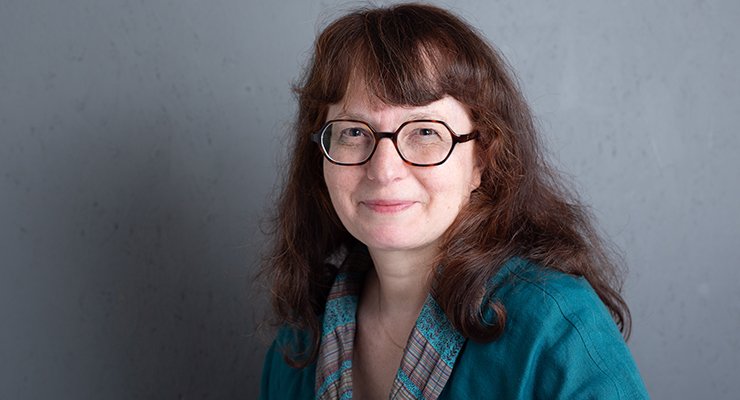
Dr Flore Vallet, lecturer+cum-research scientist, duly certified to supervise research theses, is affiliated with the Department of Mechanical Engineering and the Roberval Laboratory within the “Integrated Product-Process Systems” (SIPP) team. She is the incumbent holder of the RE USE Chair, launched in March 2025.
After gaining her agrégation title in industrial sciences, she decided to pursue additional training in industrial design. Her research today focuses primarily on the sustainable design of products, services, and systems.
In March 2025, she became the holder of the Junior Professor Chair (CPJ) titled RE USE. In practical terms? “It’s a unique position in that, contractually, I will hold it for five years. At the end of this period, and if all goes well, it will lead to a tenured professorship at UTC. It’s a programme that allows me to develop research projects while assuring a relatively limited teaching load,” she explains.
Why the name RE USE? “The term RE USE stands for ‘reindustrialization to the extent necessary,’ in the sense that it must demonstrate technological restraint in the face of the challenges of environmental and societal transition. This restraint must above all be considered early on, as of the initial design phase, which requires significant simulation resources. Two areas where the Roberval Lab. excels,” explains Flore Vallet.
This theme will generate numerous research projects involving other UTC laboratories as well as external partners, while enriching the curriculum.
Flore Vallet’s interest in the issue of technological lo-tech sobriety is not new ground for her, since she has been a member, since its creation in 2012, of the EcoSD Network, a national network aimed at fostering exchanges between research scientists/engineers and industry to create and disseminate knowledge in the field of eco-design of sustainable systems (EcoSD) in France, and beyond that, to promote French expertise in this field internationally. A network co-funded by ADEME and supported by the French Ministry for Higher Education, Research and Innovation, the French Ministry for the Economy, Finance and Industrial and Digital Sovereignty and the DGA [National Weapons Agency]. “Within this framework, projects co-led by an academic partner and an industrial partner are thus co-funded over 2 to 3 years. I am personally involved as the academic lead on integrating the concept of resource efficiency into eco-design (the ASEEC project) with APESA as the industrial partner and two other academic institutions, viz., the University of Grenoble Alpes and the University of Bordeaux,” she explains.
What are some of RE USE’s objectives? “First and foremost, it is about developing knowledge around the concepts of circularity and sobriety in the design of products and processes and, above all, assessing their environmental and societal impacts. We are conducting research at multiple scales, ranging from components to products and ultimately to broader systems such as mobility or energy systems. Thus, in the latest the Roberval Laboratory, 2024–2025, from Hcérès, the intermediate light vehicle in urban mobility was identified as a topic of interest, especially since this issue is currently gaining significant momentum. It is also a theme around which the laboratory’s research scientist and engineers could unite,” she states.
It is an academic chair that will involve many students through various so-called “TX” projects (experimental projects). “They could work, over a and above their normal coursework, on independent projects over the course of a semester. The topic of repair, for example, raises the question of how to create an ecosystem where repair becomes a recognized and accepted solution that gains ground in Society and thus contributes to technological sobriety. Repairing rather than buying a new device or new machines, in short. How can we get manufacturers, independent repairers, or citizens on board with this vision to foster the emergence of such an ecosystem – that is the question?” concludes Flore Vallet.
MSD