Phebus gateway to the future
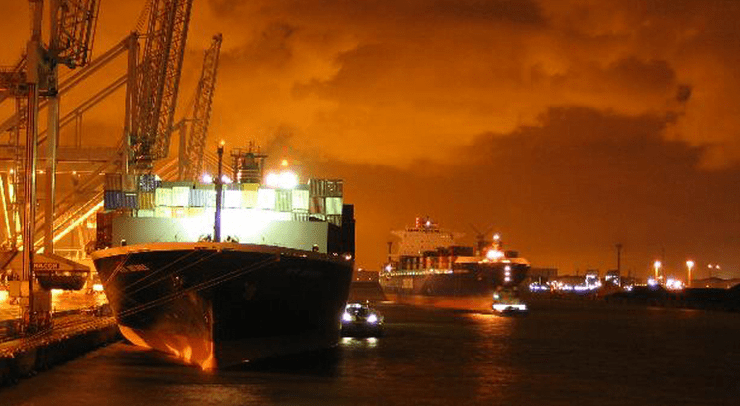
UTC Compiegne and the CETMEF (acronym for Technical research centre for maritime and river transportation) launched their joint team PHEBUS in June 2012, with the following research topics: physical modelling and cartography applied to sustainable management to port and river based cities. One of the objectives is to imagine and design the port of the future.
Modelling and mapping out the “Port of the future”
Producing renewable energy, optimising and sharing energy consumption, sustainable land management … these are some of the activities that concern the urban milieu, the implementation of which requires both good knowledge of the land space involved, and the geographic and physical capacity of the phenomena, plus the tools for concertation and involvement of various actors in the decision chain. “Moreover, cities and especially those in port or river situations appear today to have advantages when it comes to installing facilities for renewable energy, thereby extending them and improving on their efficiency factor”, explains Jean-Louis BATOZ, director of the UTC AVENUES-GSU Laboratory. The potential to capture solar energy is high given the surfaces available, but could also prove attractive since production and consumption sites coincide, reducing line losses and ensuring better efficiency. The Port of the Future therefore will be in position to take advantage in an optimal manner of urban potentials. There is, however, a prior need to model these and to map them accordingly.
PHEBUS: a unique brand of collaboration unique taking into account sustainable development in an urban milieu

It is with this objective in mind that UTC-AVENUES-GSU and the CETMEF decided to set up a joint team for research. The CETMEF – a technical service of the French ministry in charge of Ecology – is regularly engaged in national level studies about implementations that follow suite to the so-called Grenelle laws on the environment. The latter were framed and adopted for the purpose of providing coherent, national responses to currently observed environmental issues. The UTC AVENUES-GSU team have always been interested in multi-scale and multi-physical modelling for buildings, adopting pluridisciplinary and systemic aids to decision approaches for sustain, able urban developments. Collaboration between UTC and the CETMEF, in the form of the PHEBUS* should lead to the development of tools for digital and physical modelling used to analyse spatial configurations and associate data to gain better knowledge of the territories involved and better communication among the various actors.
Innovative solutions for energy procurement and risk management
In a wider context, PHEBUS proposes innovative solutions « for clean, sure energy procurement, improved safety factors for persons faced with natural and technological risks, contributing to the economic development and better ecological and social visibility of future urban port schemes”, underlines François HISSEL, Scientific Director in the “Simulation, Computer Science, Modelling” Department with the CETMEF and co-Director for PHEBUS. Several research themes have already been chosen and initiated: improved production processes for renewable energy sources, energy use optimisation in buildings, harmonising urban planning tools, control systems for risks in the context of climate change. * Urban Physics, Energy management mapping for maritime or river side cities.