PREDIT4FACE, a predictive digital twin mimicking facial expressions
University professor and emeritus director of research (2017–2023), Marie-Christine Ho Ba Tho specializes in the development of personalized models of the musculoskeletal system at UTC-BMBI. She leads the PREDIT4FACE project, one of sixteen winners of the PEPR Santé Numérique de France 2030 call for proposals, assigned a total budget of 24.5 Meuros.
Scheduled to run for four years, PREDIT4FACE has a budget of 1.59 Meuros and aims to develop a multi-scale predictive digital twin of the face. This ambitious project brings together, within a consortium of five partners, four of which are located in the Hauts-de-France region: Professor Stéphanie Dakpe, a maxillofacial surgeon affiliated with CHIMERE (UPJV-CHU Amiens, Inserm); Professor Tien Tuan Dao, a UTC alumnus (BMBI), who has joined the UMR LaMcube (Centrale Lille Institut, CNRS); Professor Valérie Burdin of Latim (IMT Atlantique, Inserm); Roberval (UTC) with Professor Alain Rassineux, a specialist in complex meshing techniques; and Mohamed Rachik, an associate professor specializing in nonlinear behaviour modelling; and finally the BMBI, which includes, in addition to Marie-Christine Ho Ba Tho, Olfa Trabelsi, an associate professor specializing in the characterization and multiscale modelling of soft living tissues. This consortium brings together a variety of complementary areas of expertise.
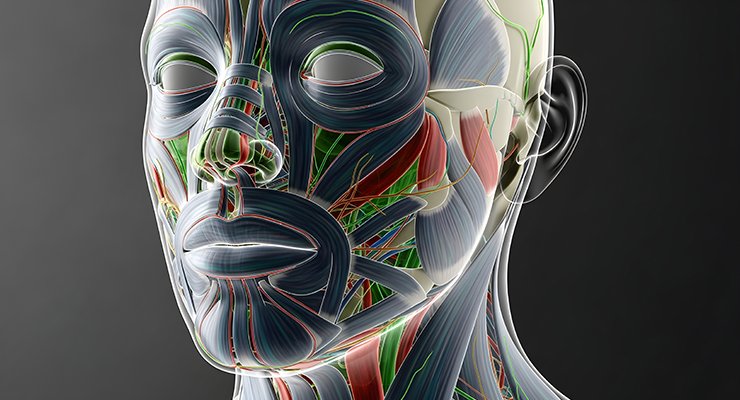
To develop a digital twin of the face, models must be customized both geometrically and in terms of mechanical properties. Various tools for modelling, meshing, medical imaging and artificial intelligence, as well as clinical expertise, are required. “Thus, using medical images, we develop a virtual 3D model in which we reconstruct the face’s geometry through segmentation. Next, we ‘mesh’ the face using finite elements to run simulations. For this work, we rely in particular on the expertise of our Roberval colleagues, a long-standing collaboration,” explains Marie-Christine Ho Ba Tho.
As pioneers in patient-specific modelling, the researcher and her team aim, through PREDIT4FACE, to better understand, model and rehabilitate facial expression. “So far, we’ve tried to understand the role of the twenty or so muscles involved in facial expressions. We’ve simulated the muscles used to smile, or those activated during certain pronunciations such as the ‘‘O’ or ‘Pou.’ We’ve also developed a tool to monitor functional rehabilitation exercises.
With the PREDIT4FACE project, we want to take this a step further. Our main goal is to develop predictive, multi-scale digital twins capable of modelling, simulating, and predicting facial expressions.” These models will incorporate the morphological and mechanical properties of the muscles and soft tissues of the face at different scales for each patient. “For each patient, we will extract their imaging data and combine it with our knowledge of biomechanics to model the behaviour of each patient’s face specifically,” she explains.
This project involves another major challenge. “Rapid model reconstruction is a huge challenge. To achieve this, part of the team is currently working on automating segmentation, while another part is focusing on automatic meshing. Furthermore, the interaction between the patient and their digital twin must occur in real time. Specifically, this will involve capturing data and performing rapid reconstruction so that, when the patient makes a facial expression, the digital twin interacts with the movement and simulates what the patient is doing. This predictive digital twin will also help us optimally plan functional rehabilitation. It will allow us to develop differentiated scenarios and, for each patient, define the optimal movements for facial expressions,” she emphasizes.
This requires a large number of innovative methodological developments in modelling, finite element coupling, reinforcement learning models and model reduction. Today, the proof of concept has been established. “Also as part of the PREDIT4FACE project, DeepFaceX—a startup currently being established by Professor Tien Tuan Dao—has developed software called iTwin4Face, designed for the rapid reconstruction and real-time analysis of facial models,” she adds. Marie-Christine Ho Ba Tho is also leading — in collaboration with Professor Tien Tuan Dao — the SCAR_FACE project (Simulation and Personalized Mechanical Characterization of the FACE), a project selected following the call for pre-maturation projects issued by the Sorbonne University Alliance’s university innovation cluster. “The goal is to develop a digital tool capable of visualizing the personalized mechanical properties of facial skin in vivo and in real time. This tool will build on doctoral thesis work conducted at BMBI on the mechanical properties of skin (Tran Viet, 2005; Ang Xiao Fan, 2016) and on the digital twin of the face (T. N. Nguyen, 2021). It was the work of the latter—who also won the Guy-Dénielou Thesis Prize in 2021—that led to the creation of DeepFaceX,” concludes Marie-Christine Ho Ba Tho.
MSD