Powders, a tricky matter
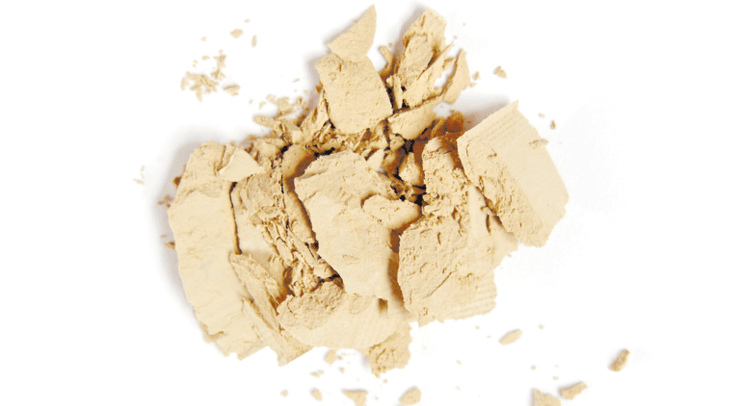
Powders are a form of matter that prove useful for storing, preserving and packaging numerous substances, but they also carry some risks, in terms of hygiene and safety, plus some physical and mechanical properties that are not well understood. In order to assist the professionals who make and/or use powders, some UTC specialists offer training packages to teach the basics of powder characterization and their properties.
“Today, close on 80% of existing products have at some time a powder-based existence”, says Khashayar Saleh, Director of the UTC Industrial Process Engineering Department (UTC-GPI), a specialist in the physics and chemistry of ‘granular’ matter. We find such powdered matter in many areas, ranging from foodstuffs, cosmetics, chemistry and pharmaceuticals or even to nuclear power fuels. They can be compacted in tablet form, or ‘raw’ (unprocessed) and present many advantages but controlling their uses calls for special expertise. The first advantage when matter is transformed into a powder lies in improved storage and preservation.
Advantages: dry, concentrate and separate
“Powdered milk, for example, loses 94% of its mass in drying out the water content” emphasises Khashayar Saleh. This is a commonplace product that clearly shows the advantage of the powder form: easy to store, easy to preserve. Cosmetics also make use of the fine grain of powders and the soft touch obtained. Powders also allow for concentrations of substances that can be very concentrated indeed, such as in the case of colour pigments. Powders are also used in pharmaceuticals to produce the coatings of so-called smart pills that will dissolve or release their active principles only under certain conditions (milieu or time). The release process is selective and increases the action and also allows you to decrease the amount of the doses administered. Another advantage of powders is that two antagonistic matters can be associated in a single product. “Detergents often mix acids and alkalis and hair creams can mix colorants and decolorants” adds Khashayar Saleh. The powder format allows industrialists to package different matters and products with perfectly controlled contents.
Risks: an explosive nature
Powders also possess a few disadvantages! In terms of hygiene and safety, those that come from organic products call for a degree of special care. It is necessary to characterize the way these bio-materials degrade so as to avoid putting unsafe products on the shop-shelves, and on top of that, organic powders have a propensity … to explode! Sugar, flour and other powders can lead to explosive mixes (detonating chemical reactions) because of the fine grain and the high surface exposed to oxygen. “In sugar and flour factories, safety mechanisms are installed, capable of detecting when a too high concentration of powder is in the ambient air”, confirm the UTC powder specialist but who immediately adds that these questions are dealt with very seriously by the industrialists in the relevant sectors.
Heterogeneous systems that resist modelling
“Another difficulty relates to powder flow and rheology. The way powders flow and how they behave under stress are features that have not as yet been studied thoroughly”, stresses Khashayar Saleh. For example, a defect in the flow line of enriched nuclear fuel could lead to possibly very disastrous results. Less dangerous, but still expensive, the unforeseen behavioural modes of the way powdered paint in projected on car bodies in the automobile industry can lead to major paint finish faults and therefore incur serious expenses for the car-makers. “Powders, by essence, are heterogeneous systems that do not readily lend themselves to modelling equations – indeed no such equations exists as is the case for fluids and gases with well-modelled mechanical properties”, underlines Khashayar Saleh, who adds that these issues are often under-estimated given that engineers are not often trained in the appropriate techniques and approaches.
Training courses offered at UTC
In the absence of a general physical model that can represent powdered systems and the wide range of problems associated have forced engineers to analyse situations on a case-by-case basis. In this perspective, UTC offers training packages to as to make the industrial actors more aware of the issues when making/using powdered matter. The courses are modular and lecturers are invited as per the specialties covered so as to detail how powders are characteristic and to convey information and data as to the physical and chemical proprieties. The overall objective is to supply information that will prove useful for questions of analysis, control and improvement of processes and products.
Whereas Khashayar Saleh is very happy to be able to organise these twice yearly seminars, for professionals who come from many differing horizons, he also finds his own personal interest here. In many instances, the trainees come with their questions but also provide valuable experience and case-studies that enrich the knowledge base of the scientists and the class lecturers.