DuraLayer, a promising innovation
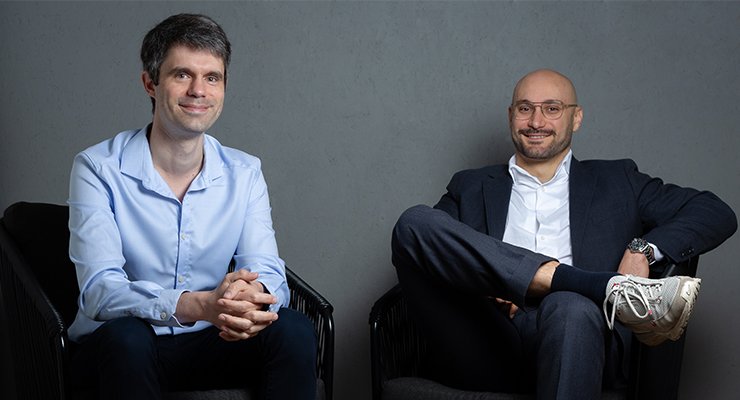
Timothée Baudequin and Jean-Philippe Tosiani, a lecturer-cum-research scientist and a postdoctoral researcher respectively at UTC’s BMBI laboratory, work primarily on biomaterials and tissue fabrication (BioFab), one of the laboratory’s four scientific research prioritised fields. Timothée Baudequin is also the coordinator of the DuraLayer project, funded by the ANR*, which is dedicated to the development of a biomimetic dura mater substitute. This project culminated in September 2025 with the filing of a patent.
*ANR — national research funding agency
Following a degree in materials mechanics engineering, Timothée Baudequin turned his attention, during his PhD, to biological applications in the field of healthcare. His work focused, in particular, on the development of biomaterials, the interaction between cells and biomaterials, as well as tissue engineering.
His interest in the issue of the dura mater? “The surgeons I was working with during my PhD on biomaterials had mentioned the high risk of infection faced by patients when cranial prostheses come into contact with a synthetic dura mater. Years later, I realised, whilst looking at a microscopic image of the dura mater, that it had exactly the same structure as a biomaterial I’d worked on during my PhD. These are polymer fibres, the same size as collagen fibres, produced using the electrospinning technique. However, whilst reviewing the scientific literature, I found that thousands of articles concerned the use of electrospinning for bone, compared with barely a dozen for the dura mater,” he explains.
Although this issue has been studied for several decades and substitutes already exist, their use is by no means risk-free. Hence the need to develop innovative alternative solutions to improve patients’ well-being and, in particular, to avoid lengthy hospital stays.
Appointed senior lecturer, Timothée Baudequin decided to carry out preliminary research on the dura mater between 2020 and 2022, funded by a ‘young researcher’ grant from the UTC’s Research Directorate and a ‘PEPS’ project from the CNRS. Following his promising results, the ANR took over in 2022 with a Young Researchers’ grant totalling nearly 290 000 euros over three years. The icing on the cake is that Jean-Philippe Tosiani was awarded a grant from the French Ministry of Higher Education and Research for a PhD thesis on this subject.
What is the aim of this thesis? “The dura mater is the outer layer of the meninges. It is a semi-rigid membrane, the function of which is to protect the brain. As existing substitutes are not without risk, we decided to explore new avenues. The aim was to develop an electrospun, biomimetic and biocompatible dura matersubstitute”, explains Jean-Philippe Tosiani.
In practical terms? “Right from the start, we realised that electrospinning could provide a good basis for developing an innovative polymer thanks to its biomimetic properties. The next step was to define the correct parameters for composition and architecture—both on the bone side and the meningeal side—and to resolve the issue of incorporating an impermeable film between these two layers to prevent cerebrospinal fluid leakage. Such leakage is one of the main causes of complications associated with prostheses currently on the market. This has been confirmed by the surgeons in the maxillofacial department at Amiens University Hospital, with whom we have been in discussion,’ explains Timothée Baudequin.
It was a successful endeavour, as the ANR project was extended by six months to include in vivo tests in the thesis and to establish a solid proof of concept.
“The substitute we have developed consists of three layers of polymers. The two outer layers are produced by electrospinning to ensure biomimetic properties, whilst the middle layer is produced by solvent casting. Electrospinning is a technique which, by applying a voltage difference, allows a polymer solution to be spun – depending on the chosen settings – and a fibrous material to be collected on a rotating cylinder. As for solvent casting, it is, in a sense, a moulding technique. A polymer solution is poured into a calibrated container, according to our requirements, and left to dry, producing a plastic film which can be inserted between the two outer electrospun layers. Both the final material and the outer layers have been optimised for each cell type – bone or dural – following biological analyses”, explains Jean-Philippe Tosiani.
A patent application was therefore filed for a prototype in September 2025, with the support of SATT Lutech, the technology transfer accelerator of the Sorbonne University Alliance. “The SATT has agreed, via its investment committee, to support us for two years so that we can continue the in vivo validation process, which would pave the way for industrialisation. Jean-Philippe is responsible for this industrial development,” concludes Timothée Baudequin. The team also receives support from the Fondation des Gueules Cassées.
MSD