At the heart of scientific expertise in the field of hydraulics at the UTC
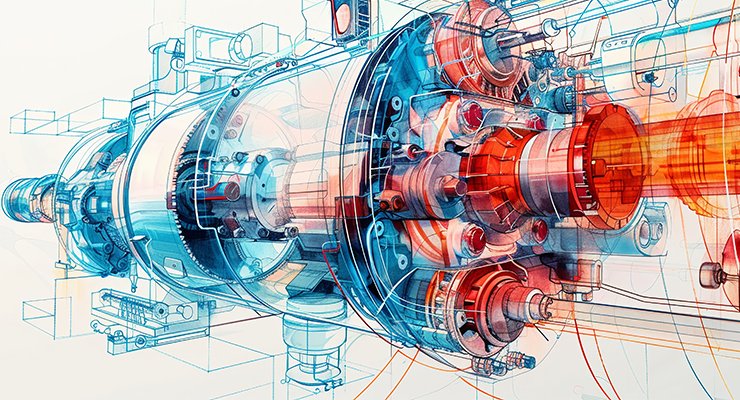
With its numerous stakeholders, it is time to take stock of the Chair of Hydraulics, led by Eric Noppe since 2010. One of its key contributions lies in the many engineers who have graduated from UTC and gone on to join the ranks of manufacturers and users of hydraulics following their time on the programme.
The Chair of Hydraulics was established in 2010 in response to the need to ensure the long-term future of teaching in hydraulic power transmission within UTC’s engineering degree programme. This Chair is supported by the UTC Foundation for Innovation and the sponsor CETIM, which funds the hydraulics platform located on the ground floor of UTC’s Daniel Thomas Innovation Centre. “This sponsorship funding is a key driver as it helps to generate business, industrial contracts, European projects, numerous interns and engineers recruited through the platform over the years, and, above all, a hydraulics accreditation awarded to UTC Mechanical Engineering graduates, which helps to support the hydraulics sector”, says Patrick Dupin, Chief Operating Officer of the Saint-Gobain Group and Chairman of the UTC Foundation for Innovation. Sponsorship acts as a catalyst: it transforms an initial investment into a network of collaborations, projects and opportunities that benefit all partners. The UTC and the Technical Centre for Mechanical Industries (CETIM) have therefore established the Chair in Hydraulics and Mechatronics at the initiative of manufacturers in the hydraulic transmission sector and their trade association, Artema. “We are deeply committed to the chair’s two pillars. Firstly, the hydraulics teaching component delivered at engineering degree level. That is why it was originally established. But also, the industry pillar. This has been our focus from the outset to forge closer ties with companies – whether large groups, SMEs or ISE* – adds Laurence Cherillat, Artema’s General Delegate. “To engage with this type of company, you really need to speak the language of industry, not just that of a researcher. You need that knowledge of the industry. This was one of the key factors when Éric Noppe was recruited, because he had a background in industry.”
* SME = Small and Medium-sized Enterprises; ISE = Intermediate-Sized Enterprises)
Fifteen years dedicated to hydraulic innovation
The Chair therefore enables a course in hydraulics to be delivered as part of the engineering degree programme, with 25 to 30 students trained each year. It also generates collaborative technological research through a testing and experimentation platform integrated into the Roberval mechanics laboratory. Finally, a continuing professional development programme for industry professionals complements this work. “Keeping abreast of hydraulic technology has enabled me to update my knowledge and meet my peers at international conferences. The close relationship with the engineering and continuing professional development company InSitu has provided an opportunity to offer work placements and roles to early-career engineers. Concerns regarding electrification and energy efficiency have a direct impact on hydraulics, which is a reliable technology but is not always used to its full potential due to a lack of demand. All of this justifies our work. The applied aspect enables collaborative research addressing genuine industrial concerns”, adds Éric Noppe, who held the chair until 30 June this year. He joined the UTC as a contract lecturer and research scientist after 25 years’ experience in industry.
Training and research at the highest level
Research engineers, PhD students and engineering students on work placements form the backbone of the chair. And CETIM, a patron of the UTC Partnership Foundation, has funded its operations from the outset. “All this is bearing fruit because, every year, we have a cohort graduating with a grounding in power hydraulics. This is important because it enables us to meet the needs of industry. A number of these engineers will go on to work for hydraulic component manufacturers or in other sectors and will instinctively think in terms of hydraulics. CETIM is committed to continuing its support because maintaining high-level training and research in these areas is vital. This is also the aim of our work within the framework of Mecallians, which brings together the FIM, UNM, Sofitech-Cemeca and CETIM. Through Mecallians, we are committed to presenting a stronger, more accurate and more attractive image of our professions to the industry’s future talent. They will be on the front line in addressing major economic, social and environmental challenges. Our responsibility is to provide them, today, an effective framework for action”, says Philippe Lubineau, Director of Research and Programmes at CETIM, which also supports the hydraulic drone – now the chair’s flagship project – with the aim of producing an original demonstrator weighing less than 25 kg by 2025. “The next step would be an industrial prototype,” concludes Éric Noppe. “The hydraulic mechatronic device is very appealing to students and ensures excellent visibility, particularly thanks to the EMM2015 Mechatronic Awards and an exhibition at the Global Industrie trade fair at the centre of the Mecallians stand, in partnership with Artema. In fact, activities promoting hydraulics and research feed into teaching and vice versa. Together, they shape the overall landscape of the Chair. My hope is that it will continue with the same momentum and that the new term will be even more successful, for the benefit of the students and the profession.”
And the successor is…
“Hydraulics-related issues are linked to electrical engineering, fluid mechanics and flow analysis, optimisation and design methods in industrial engineering, acoustics, tribology and materials, and control systems.” In short, this provides a very rich field of application for Roberval’s scientific activities. For students, it is a way to refine their knowledge whilst studying for their degree, but also to take part in industrial R&D projects after graduation, adds Marion Risbet, director of the Roberval laboratory. “For them, the Chair is an ideal platform for entering industry with a recognised specialisation. They benefit from real-world industrial challenges, as well as high-level academic rigour that stimulates them. For the mechanical engineers at theUTC- Roberval laboratory, this provides a wealth of collaborative topics and case studies, because in a field as multiphysical as hydraulics, nothing can be achieved in isolation.” »
KD