Understanding nano-reinforced materials
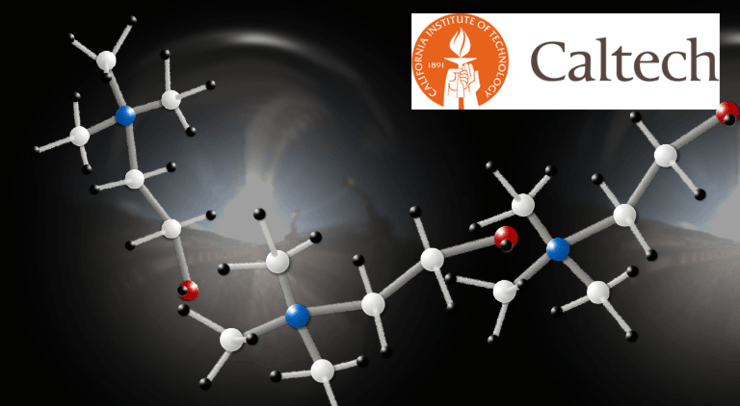
Introducing nanoparticles in polymers provides a spectacular improvement to their mechanical properties. These results have already been observed and used and Fahmi Bedoui, a research scientist with the UTC-Roberval Laboratory and at the California Institute of Technology (Caltech) would like to better understand the phenomena with a view to modelling them and predicting their behaviours.
It is one thing to “play” with nanoparticles to make new materials but to better understand the physical and mechanical properties to predict characteristics is another game altogether. This is what Fahmi Bedoui, a research scientist at UTC-Roberval Laboratory (and a specialist in polymer mechanical behaviour) has noted. “By adding nanoparticles to polymer structures, their rigidity and resistance factors can be modified”, explains Fahmi Bedoui but “we are incapable of understanding why or how these mechanical properties change as a function of the quantities involved or the materials involved”. And to study such assemblies, it is necessary to explore the crossroads between chemistry, physics and mechanical engineering sciences.
A model in molecular mechanics
Inasmuch as the UTC-Roberval Laboratory specializes in mechanical engineering sciences, Fahmi Bedoui looked up some former colleagues had met a couple of years ago at the New Jersey Center for Biomaterials, USA. Currently holding positions at the prestigious California Institute of Technology (Caltech), these material physics experts are developing a model in molecular mechanics that could be used to explore the nano-doped materials and related questions. Fahmi Bedoui first went, in 2009, to the Caltech Materials and Process Simulation Center as a visiting research scientist, and is now an associate scientist at Caltech.
Understanding and predicting nano-reinforced material behaviour
The objective assigned to our research is to better understand what takes place at a molecular scale when nanoparticles are used as additives, to assess the benefits of using them to reinforce polymer matrices”, explains our specialist of molecular mechanics models. A very wild range of applications can be envisaged to replace composites: in sectors such as automobiles, aeronautics, aero-space and even in certain medical fields. The collaboration between the UTC-Roberval — specialised in mechanical engineering sciences and the Materials and Process Simulation Center (Caltech-MPSC), brings together ‘pure physicists’ and can be seen as a rewarding combination leading potentially to predictive models to explain the behavioural patterns of nano-reinforced materials.
“At this time, there is no specific agreement between Caltech and UTC”, emphasizes Fahmi Bedoui and collaboration currently relies exclusively on scientist-to-scientist research work and exchanges. A partnership should be planned for at least 2 years to finalise the two ongoing projects. Fahmi Bedoui envisages other forms of collaboration, given that “there is no lack of viable, joint research topics”, he adds. Collaboration among research scientists does not preclude having a more formal collaborative agreement. The Caltech model is not so different from that at UTC and an official agreement would surely open up prospects for PhD students and young scientists to travel, exchange and work between the two institutions.