A sign of recognition: the joint MC2Lab (UTC-CEA)
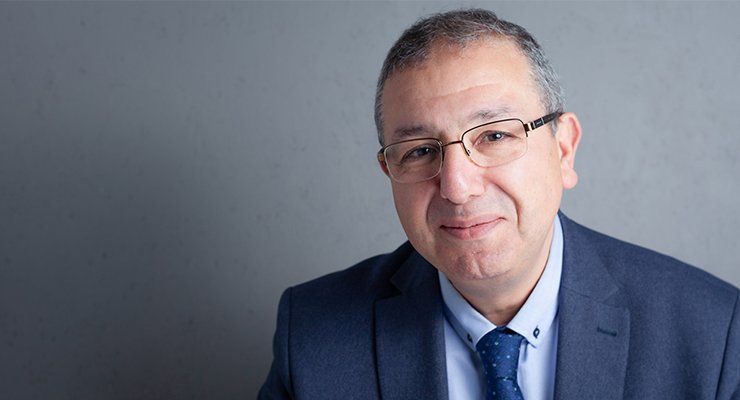
Tenured full professor, Zoheir Aboura, works on the mechanical behaviour of composite materials at UTC’s Roberval laboratory.
The laboratory’s reputation in the field of mechanical behaviour and the analysis of damage mechanisms in composite materials has made it a world-class leading authority in this area of research. This expertise has been built through numerous theses, as well as close collaborations with major industrial players, foremost among them we have Safran and its numerous subsidiaries, including Safran Aircraft Engines, Safran Composites, Safran Ceramics and Safran Landing Systems… “Our expertise in the field of damage-induced behaviour of composites has given us excellent national visibility,” states Zoheir Aboura.
This reputation led the CEA [French national atomic energy agency]- already working alongside the Roberval Laboratory on a thesis in collaboration with MBDA and Pyromeral Systems — to propose the creation of a joint laboratory, marking a new phase in this strategic partnership.
This joint laboratory, created with Dr. François Guillet of the CEA and inaugurated in September 2025, is named the “Laboratory of Ceramic Matrix Composite Mechanics” (MC2Lab). A “wall-less” laboratory which aims to strengthen and develop expertise in academic and applied research on shared challenges, focusing on two main themes:
- the mechanics of ceramic matrix composite (CMC) materials (testing, behaviour, modelling),
- the fabrication of prototype CMC composite parts to characterize their mechanical behaviour.
The research focuses in particular on oxide-oxide ceramic composites, cutting-edge materials capable of maintaining excellent mechanical performance at very high temperatures—up to 1 000 °C – while resisting the effects of oxidation. These properties make them prime candidates for demanding industrial applications.
In this context, the Roberval Laboratory leverages its expertise in experimental techniques and the analysis of damage mechanisms under complex loading conditions. For its part, the CEA contributes its modelling expertise, particularly through the development of material behaviour laws.“ “The goal is to establish an ongoing dialogue between experimental testing and numerical calculations in order to better understand and predict the behaviour of these materials under extreme conditions,” explains Zoheir Aboura.
Two joint PhD theses have already been launched to advance the understanding and modelling of ceramic matrix composites. The first, supervised by Prof. Alain Rassineux since October 2025, focuses on the mesoscale network of ceramic matrix laminates, a key step toward better representing the internal structure of these materials in numerical models.
Une deuxième thèse débutera en octobre 2026. Codirigée par les Pr Nicolas Buiron et Pierre Feissel, elle portera sur les sollicitations multiaxiales appliquées aux composites à matrice céramique. Pour mener à bien ces travaux, le MC2Lab prévoit l’acquisition d’un hexapode, un dispositif expérimental capable d’imposer simultanément plusieurs types de contraintes.
A second thesis will begin in October 2026. Co-supervised by Professors Nicolas Buiron and Pierre Feissel, it will focus on multiaxial stresses applied to ceramic matrix composites. To carry out this work, the MC2Lab plans to acquire a hexapod, an experimental device capable of applying multiple types of stresses simultaneously. “Until now, we tested materials under tension, torsion, or bending separately. With the hexapod, we will be able to combine all these stresses to observe their actual behaviour and see if existing models can reproduce them, or if they need to be updated,” explains Zoheir Aboura.
A third thesis, currently under discussion between the two partners, could begin in October 2026, confirming the momentum of research underway on these materials designed for extreme environments.
MC2Lab is fully aligned with the Roberval Laboratory’s development strategy, which focuses on structuring and sustainable partnerships. This approach is already illustrated by other collaborations with various partners, such as the joint laboratories Dimexp with DeltaCAD, Fusemetal with ArcelorMittal France, and CREM with CETIM.
“At Roberval, we have been working with industry over a long period on short- or medium-term projects. Today, our policy is to build long-term partnerships so that we can plan for the future. The partnership with the CEA is fully in line with this approach,” emphasizes Zoheir Aboura.
For the CEA, the goal is to leverage a laboratory with a strong mechanical engineering focus, complementing its own expertise in modelling and the behavioural laws of ceramic matrix materials. The organization also possesses state-of-the-art experimental facilities that complement those at Roberval. These include a large-scale tomograph capable of accommodating testing machines, offering the ability to observe materials under real-world stress conditions, as well as a high-temperature nanoindenter.
“This equipment opens up very promising prospects. Our ambition is therefore to jointly develop, over the long term, our knowledge of these materials by pooling our resources and human capital,” concludes Zoheir Aboura.
This approach illustrates the evolution of collaborative research toward more integrated and forward-looking partnerships, serving the objective of scientific and industrial innovation. Indeed, the potential applications are vast and strategic. These materials are of interest to demanding sectors such as space, aeronautics, civil nuclear power, civil engineering, and even competitive motorsports— all which fields having in common resistance to extreme conditions which is a major challenge.
MSD