MoCapia: an intuitive motion capture tool
As head of the BioMovE research pole at UTC’s Biomechanics and Bio-engineering Laboratory (BMBI), Khalil Ben Mansour has been working on the MoCapia project for two years now. Since its launch, the project has successively involved six UTC interns. Yiyang Huang and Macéo Narbon, 3rd UTC students currently majoring in Computer Sciences and Engineering students are involved here.
What are the project’s objectives? “Our research aims to develop solutions and biomechanical models that will, in particular, allow us to analyse a given person’s health status, assess their performance, and prevent musculoskeletal disorders,” he explains.
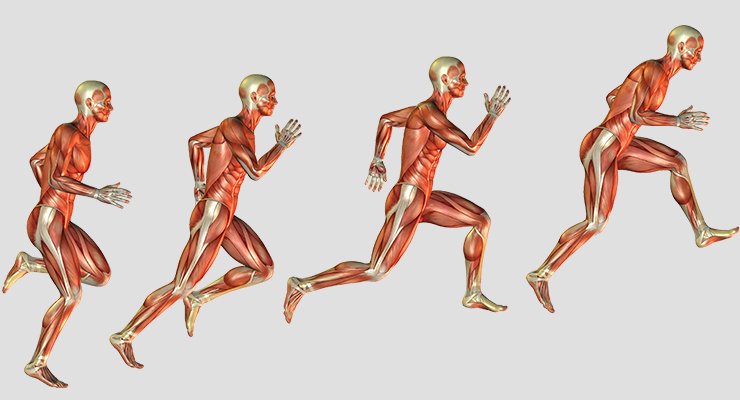
This research has applications in many fields, such as sports, health and ergonomics. Until now, one of the most commonly-used measurement techniques has been 3D motion capture. “In this case, we use a system of optoelectronic cameras to film the movement. But this technique requires a high level of expertise, significant preparation time, and lengthy processing times. This makes it difficult to use in a clinical setting, for example, and ultimately limits its application to laboratory research,” says Khalil Ben Mansour.
However, with the rise in computing power and the advent of AI-based pose estimation models, things are starting to change. especially since today, with simple, commercially available cameras, it is possible to measure movements without having to attach markers to the subject. This will significantly reduce both the cost of equipment and the preparation and processing time.
Hence the idea behind the MoCapia project. “We quickly became interested in this very recent technology, which has not yet been validated from a scientific standpoint, particularly in terms of accuracy. We decided to use artificial intelligence to develop a motion capture tool that is easy to handle and intuitive to use. Currently, we are working to fine-tune and improve its accuracy. To do this, we are testing various solutions to obtain comprehensive and precise data that
Beyond improving the accuracy of this new technology, another idea has taken root within the team. “We decided to use pose estimators generated by artificial intelligence. However, existing pose estimators are based on a single camera because their purpose is not for clinical use, for example, but primarily for video animation. Indeed, in a video game, what matters is the fluidity of movement. This is somewhat “limited” given the complexity of constituent elements of a given movement that we would like to quantify and analyse in more rigorous fields of application, such as medicine or high-level sports,” Khalil explains.
It was then that the team came up with the idea of coupling multiple cameras to perform a 3D reconstruction of the movement. This work offers a number of challenges, such as camera calibration and synchronization, among others. “We’re working constantly to improve the model by increasing the number of cameras to gather more data and by testing different calibration techniques. Ultimately, the goal is to find the optimal combinations that allow us to get closer to our reference model and achieve a level of precision compatible with applications in bio-medicine or elite sports. If we take the medical sector as an example, it is imperative for the prosthetist to know the exact angle needed to accurately fit a prosthesis,” explains Khalil Ben Mansour.
In addition to the scientific validation of this new technology, the MoCapia project primarily aims to develop a graphical interface so that anyone—from physical therapists to doctors, ergonomists, or sports coaches—can use it easily and intuitively. This is the challenge that the 6 UTC interns have taken on in succession since the project began. At present, 3rd year students Yiyang Huang and Macéo Narbonnet have taken over from the four previous interns.
What are their respective roles? “In addition to improving camera calibration, I enhanced the 3D model of the human body to ensure accurate estimation of internal and external rotations of the body segments,” says Macéo Narbonnet. Yiyang Huang, for her part, has focused primarily on usability. “I optimized the ergonomics of the graphical interface by adopting an architecture that allows multiple tasks to be executed simultaneously without bugs, making the software intuitive and fluid for the user,” she says.
MSD